Template guide
The Bloomberg Terminal Aesthetic for Independent Finance Creators
Independent finance creators can now produce video content with the visual language of professional financial media — without a studio, a production team, or a Bloomberg subscription.
Overview
TL;DR: Independent finance creators can now produce video with the visual language of professional financial media — no studio, production team, or Bloomberg subscription required. Here's how.
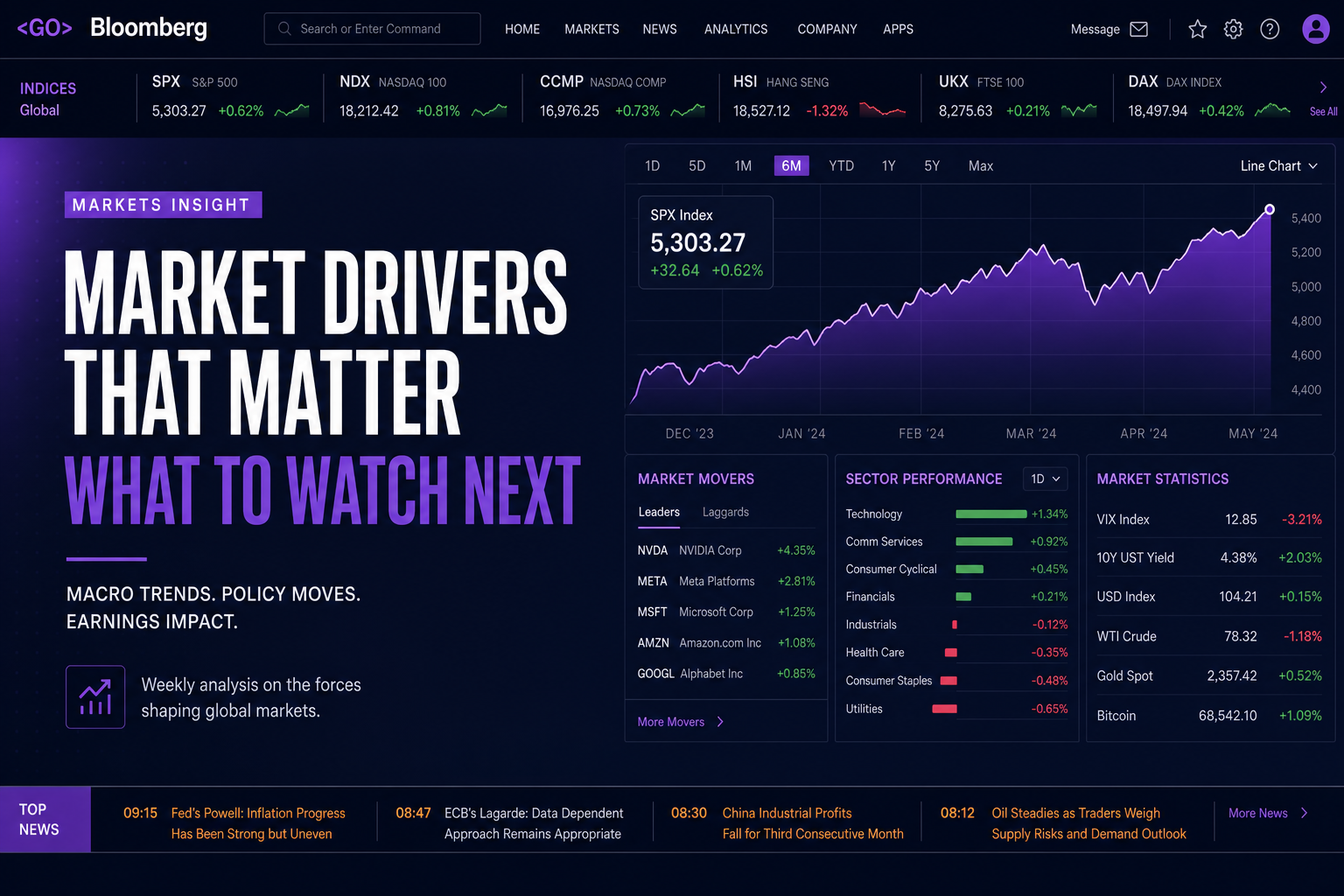
There's a specific visual language that signals financial authority. You know it when you see it: dark backgrounds with high-contrast data graphics, clean typography with metric callouts, the compressed layout of a terminal or trading screen translated into broadcast media. Bloomberg, CNBC, financial Twitter's most-shared data threads — they all share the same visual DNA.
That aesthetic isn't accidental. It communicates something specific: this content is from someone who takes markets seriously. The visual signals credibility before a word of analysis has been heard.
For independent finance creators — newsletter writers, independent analysts, research shops — building that visual identity used to require a production team. It doesn't anymore.
Why Visual Identity Matters in Finance Content
In most content categories, quality of thinking is the primary differentiator. In finance content, quality of presentation is a trust signal that precedes quality of thinking.
This is because financial markets are high-stakes. When someone is watching your analysis before making an investment decision, they're evaluating your credibility fast. The production quality of your video is part of that credibility signal — not the whole signal, but a meaningful component of it.
Compare two finance videos with identical analysis:
1. Video A: clean Bloomberg-style dark template, professional narration, data graphics, structured scene layout
2. Video B: talking head on a phone camera with uneven lighting and a cluttered background
The analysis is the same. The credibility signal is not. Video A is the one that gets saved, shared, and subscribed to.
Independent creators who invest in visual identity early — before they have large audiences — are building a brand that scales. The audience that discovers you at issue #3 gets the same professional presentation as the audience that discovers you at issue #300.
The Nightfall Template: Bloomberg Terminal for Video
Article Video Studio's Nightfall template is built for exactly this aesthetic. Design elements include:
1. Dark glass panel backgrounds — the dark background with subtle depth that signals "terminal" rather than "slideshow"
2. Neon-tinted data graphic overlays — when a number appears in the narration, it shows up as a styled data graphic in the frame
3. Clean sans-serif typography — the high-contrast, legible type that financial media uses
4. Structured scene layout — information appears in a hierarchy that mirrors the layout of professional financial information design
The result is a video that reads as professional financial content before the viewer has processed a single word of your analysis.
How Independent Creators Are Using It
The most effective applications of the finance-first aesthetic for independent creators:
Market commentary series: A weekly or bi-weekly breakdown of macro conditions, sector moves, or thematic trends. The Nightfall template gives each episode a consistent visual identity that builds over time. Subscribers begin to recognize the aesthetic before they read the title.
Research previews: Take the key finding from a paid research report and produce a 90-second preview video — thesis, data point, implication, CTA to buy the full report. The professional visual framing signals that the full report is worth the price.
Rate and yield analysis: Content about interest rates, bond markets, and monetary policy benefits enormously from data graphic overlays. When you say "the 10-year yield rose 23 basis points to 4.71%," that number appearing on screen in a styled data graphic creates the kind of visual moment that viewers clip and share.
Earnings breakdowns: Post-earnings analysis with the key metrics displayed as graphics. This content type has a natural visual structure: revenue, earnings per share, guidance. Each number as a data graphic scene, narrated with your interpretation, produces a video that's both informative and visually compelling.
Building a Recognizable Brand Across Videos
The finance creators with the most leverage on video platforms aren't producing better analysis than everyone else. They're producing analysis that viewers immediately recognize as theirs.
Consistency is the mechanism. When every video has the same template, the same narration voice, and the same caption structure, the audience develops brand recognition. After 10 videos in Nightfall with the same voice, a viewer who encounters your video in a search result or their feed recognizes it as yours before they read the title.
This brand recognition has compounding effects:
1. Subscription rate increases — viewers who recognize your brand are more likely to subscribe without additional persuasion
2. Early engagement improves — returning viewers engage faster (within the first 30 seconds), which signals to the algorithm that the video is high-quality
3. Direct search increases — when your brand is established, people start searching your name directly on YouTube rather than finding you through topic searches
Most independent finance creators underinvest in consistency in favor of variety. The data consistently shows that consistent presentation outperforms varied presentation for channel growth.
The Production Setup: No Studio Required
The complete production setup for professional finance video content in 2026:
Content — What You Need: Your newsletter or analysis (already written) · Cost: $0
Video tool — What You Need: Article Video Studio · Cost: $4 per video
Template — What You Need: Nightfall · Cost: Included
Narration — What You Need: AI voice from Article Video Studio library · Cost: Included
Distribution — What You Need: YouTube + LinkedIn · Cost: Free
Total per video — What You Need: — · Cost: ~$4
No camera. No microphone. No lighting kit. No editing software. No studio rental. No video editor freelancer. The production cost is the render fee and your time to review the scenes.
A Bloomberg-adjacent visual output for $4 per video is a fundamentally different economics than what independent finance creators had access to 3 years ago.
Visual Hierarchy: What Viewers See in the First 3 Seconds
Whether a viewer keeps watching is decided in the first 3 seconds. For finance video, the visual elements that appear in those 3 seconds need to signal:
1. This is professional content — the template quality communicates this immediately
2. This is specific content — the title card should show the exact topic, not a vague category
3. This is worth time — the first scene's production quality sets expectations for the rest
For Nightfall template videos, the opening scene is typically a title card with the main thesis on a dark glass background. This tells the viewer exactly what they're about to hear and signals that the production quality matches the content quality.
Compare this to a thumbnail-and-title approach where viewers decide before they even click. For videos that are already playing (LinkedIn autoplay, YouTube suggested), the first 3 seconds are the click decision. Professional opening scenes meaningfully improve completion rates.
Frequently Asked Questions
Can I customize the Nightfall template with my own brand colors?
Yes — template color settings can be adjusted to match your newsletter's brand palette. If your newsletter has a specific accent color or brand identity, apply it to the template for a more cohesive look across video and email.
What if I want to use my own charts and visualizations instead of the auto-generated graphics?
In the Article Video Studio editor, you can swap individual scene images with your own charts, data visualizations, or graphics. Upload your chart to the scene where the relevant data is being narrated. This is particularly valuable for original research where your data visualization is the differentiator.
Is the Bloomberg-style aesthetic appropriate for all finance content?
Nightfall works best for serious analytical content — market commentary, research, macro analysis, sector breakdowns. For lighter personal finance content or general investing tips, a cleaner and lighter template like Gridcraft may better match the tone. Match the aesthetic to the seriousness of the content.
How do I know which template to use for a given type of content?
General framework: Nightfall for macro and market commentary; Gridcraft for structured breakdowns and frameworks; Chronicle for deep research; Spotlight for big calls and contrarian takes. When in doubt, Nightfall is the safest choice for finance content because it signals professionalism by default.
What's the best way to introduce my new video format to my existing subscribers?
Announce it in a newsletter issue: "I'm now publishing video versions of my analysis on YouTube and LinkedIn. [Link]. Same thinking, new format." Subscribers who are also on LinkedIn or YouTube will follow. Some will start sharing the videos rather than forwarding the newsletter — video is simply more shareable than email.