Use case
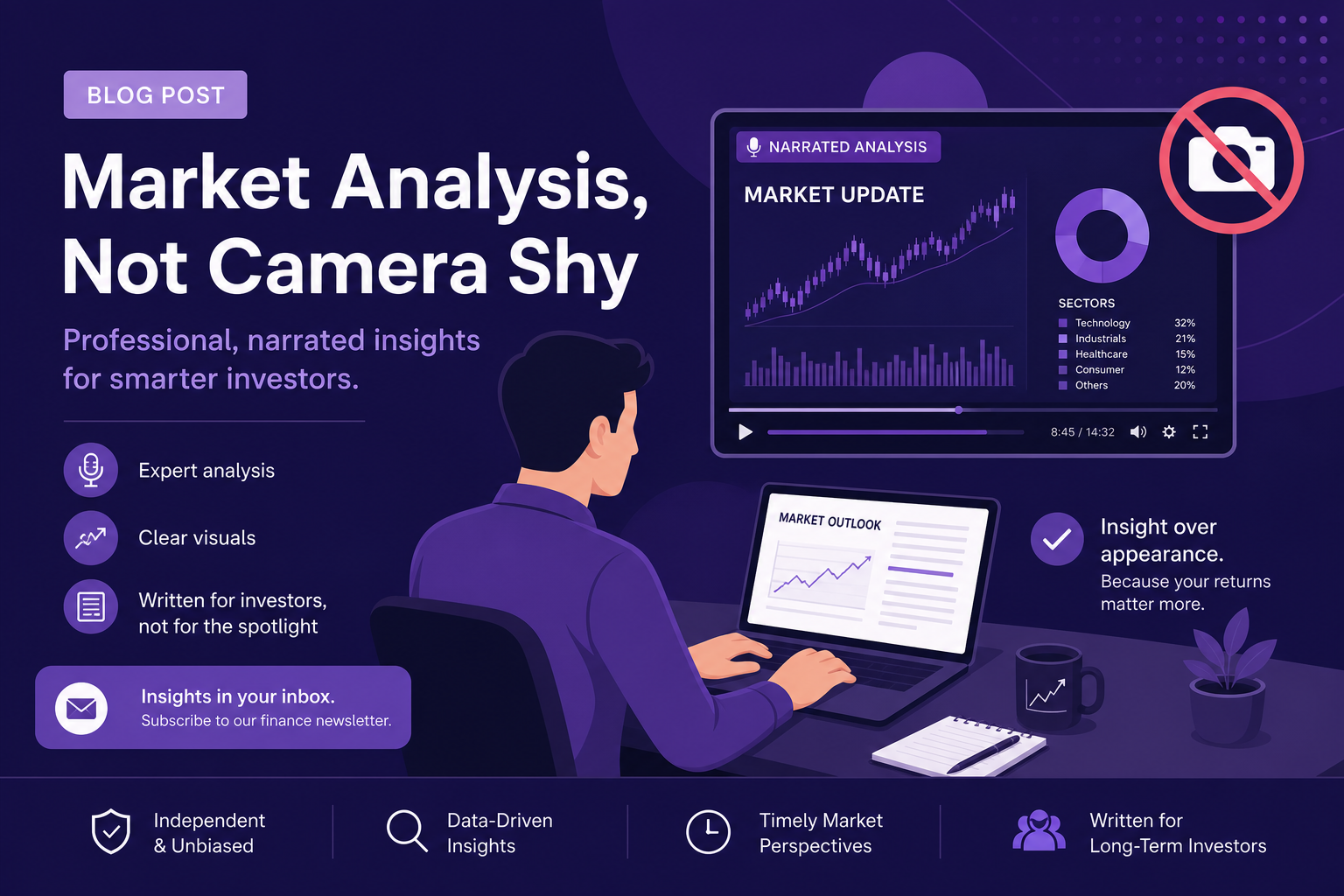
How Finance Writers Are Reaching Video Audiences Without Ever Going on Camera
Finance newsletter writers and analysts are building YouTube and LinkedIn audiences using their existing writing — no camera, no recording, no video editing experience required.
Overview
TL;DR: Finance newsletter writers and analysts can build YouTube and LinkedIn audiences from their existing writing — no camera, recording, or video editing experience needed.
The finance video space on YouTube and LinkedIn is dominated by talking heads. Charts-and-chyrons presentation style, someone explaining macro trends or stock analysis directly to camera, built over years of consistent posting.
Most finance newsletter writers look at that model and conclude it's not for them. The camera, the setup, the lighting, the need to perform on cue — it's a different skill set than writing, and it requires gear, time, and a certain comfort with being filmed that many analysts and researchers simply don't have.
What most don't realize is that the camera is optional. Finance writing converts to video unusually well without it.
Why Finance Content Translates Well to Non-Camera Video
Finance writing has a structure that maps directly to video scene-by-scene:
1. A thesis or central argument → opening scene and narrated title card
2. Data points and market observations → data graphic scenes with the number overlaid in the frame
3. Supporting analysis → body scenes with narration and contextual visuals
4. A take or prediction → closing scene with your conclusion narrated over a closing visual
When a finance newsletter is fed into an AI video tool, the resulting video is narrated — professional voice delivering your text — with visual scenes that treat your data points like a broadcast: the numbers appear on screen as graphics rather than just being spoken.
The viewer experience isn't "someone read an article out loud." It's closer to "a financial news segment about this specific thesis" — complete with the data visualization, professional narration, and structured pacing of actual broadcast finance content.
The Actual Workflow: Newsletter to YouTube Video
Here's what the production process looks like end to end, with no camera involvement:
Step 1: Finish writing the newsletter as you normally would: Nothing changes in your writing process. The newsletter you publish to your email list is the same source document for the video.
Step 2: Open Article Video Studio: Go to articlevideostudio.com → New Project. Paste your Substack/Beehiiv URL or the newsletter text directly.
Step 3: Select a finance-appropriate template: Template choice determines the visual identity of the video:
1. Nightfall — dark glass panels with neon-tinted metric graphics. Feels premium, analytical, Bloomberg-adjacent. Best for market commentary, macro analysis, deep dives.
2. Gridcraft — editorial bento-grid layout. Clean, modern, structured. Best for breakdown pieces and "things to watch" style content.
3. Chronicle — document-forward style, high-information density. Best for data-heavy analysis where credibility and thoroughness matter.
Step 4: Choose a voice: The voice library has multiple options ranging from measured anchor-style delivery to more conversational analyst tone. Listen to samples and pick one that's closest to how you'd want your writing delivered. Save your preference for consistency across videos.
Step 5: Generate and review: Generation takes 2–3 minutes. Review each scene — check that key data points appear correctly, that the narration captures your main arguments, and that the AI hasn't misrepresented a nuanced claim. Finance writing tends to be clear and well-structured, so extraction accuracy is typically high.
Step 6: Export and publish: Export as MP4 for YouTube and LinkedIn. Export as PDF if you want to post as a LinkedIn carousel alongside the video.
Total time: 20–35 minutes from finished newsletter to video file ready to upload.
Platform Strategy for Finance Writers
YouTube: Build the long-term discovery asset
YouTube is a search engine. When a retail investor searches "why is [X sector] falling," "what is [financial instrument]," or "is [Y] a good investment in [year]," they'll find videos that answer those questions — not newsletters. If your best analysis is published in newsletter format only, you're invisible in that search.
Title optimization matters more than production quality on YouTube. A well-titled video with clean narration and professional visuals will outrank a beautifully filmed video with a vague or keyword-weak title. Finance newsletter writers who think analytically are actually better positioned to write strong YouTube titles than people who focus on production aesthetics.
Example title reframes for finance content:
"Issue #54: Regional Banks" — YouTube-Optimized Video Title: "Why Regional Banks Are Mispriced Right Now"
"Q3 2026 Macro Update" — YouTube-Optimized Video Title: "What the Q3 Macro Data Actually Means for Your Portfolio"
"The Case for Commodities" — YouTube-Optimized Video Title: "The Commodity Supercycle: Is This Time Different?"
The YouTube title doesn't need to be sensational. It needs to be searchable and answer the question a viewer is already asking.
LinkedIn: Reach the professional investor audience
LinkedIn's finance audience is different from YouTube's. These are fund managers, advisors, analysts, and finance professionals who scroll LinkedIn actively and engage with finance content. The same video you post on YouTube lands differently here — it feels authoritative rather than educational.
Post as native video (not a YouTube link). LinkedIn's algorithm suppresses external links in favor of native uploads. Write a 2–4 sentence text caption that states your thesis directly — this is what hooks people before they watch.
Finance content on LinkedIn is chronically underserved. Most finance professionals post text only. A finance writer who consistently posts high-quality video analysis on LinkedIn is an immediate standout in a feed of text posts.
The Aesthetic That Finance Audiences Respond To
Camera-free finance video works because the finance audience values information over entertainment. They are not watching you — they are watching your argument.
What signals credibility in finance video content:
Data on screen, not just in narration. When you say "yields rose 47 basis points in Q3," the number should appear on screen as a graphic, not just be spoken. Article Video Studio's templates handle this automatically — numbers from the source text appear as overlaid data graphics in relevant scenes.
Measured narration pace. Finance content needs to be delivered at a pace that lets viewers absorb the information. Too fast feels reckless; too slow feels condescending. AI narrators in Article Video Studio can be set to match the pace that works for your content type.
Consistent visual identity. Picking one template and sticking with it creates brand recognition. After 10 videos, viewers start to associate your visual aesthetic with your content. This is what separates a YouTube channel from a collection of random videos.
No filler content. Finance audiences abandon videos quickly when the content isn't adding value. This is actually an advantage for newsletter-first creators — your writing is already optimized for information density. The video version preserves that density rather than diluting it with talking-head filler.
What Makes Finance Writing Convert Better Than Other Content Types
Finance writing has structural properties that make AI video conversion more accurate and useful than most other content:
Precision language. Finance writers use exact numbers, specific company names, defined terms. AI extraction is more accurate when the source text is precise. "The 10-year yield rose 47 bps to 4.73%" converts to video correctly. "Rates went up a lot" is vague and harder to frame visually.
Clear argument structure. Finance analysis follows thesis-evidence-conclusion. This maps directly to video scene structure. The AI doesn't have to infer narrative structure — it's already there.
Inherent visual hooks. Market data, percentage changes, and chart patterns are visually compelling. Even without real-time charts, the numbers presented in clean data graphic overlays are more engaging than most text content would be on screen.
Frequently Asked Questions
If I don't appear on camera, will viewers trust the content?
Trust in finance content comes from analytical rigor, not from seeing your face. The most trusted finance content on the internet includes completely anonymous newsletters and accounts with massive followings. Your track record and quality of thinking is what builds trust, not whether you appear on screen.
What if my newsletter has subscriber-only content?
For premium-gated issues, you have options: convert a free teaser version, create a separate "public" version with the key points (but not the full analysis), or publish to YouTube with a "full analysis for subscribers" CTA. Many finance newsletters use video to drive paid subscriber conversions — the video is the preview, the newsletter is the payoff.
Can I use my brand colors and logo in the video?
Template customization allows for color and logo adjustments. If you have a specific brand identity for your newsletter, this can be reflected in the visual output. Finance brands with established visual identity should calibrate the template to match before their first video.
What about compliance requirements for regulated finance professionals?
Article Video Studio's output is reviewable before publishing — nothing goes live without your approval. For registered investment advisors or broker-dealers with compliance review requirements, the workflow is: generate → internal review → publish. The review is on the same content you're already publishing in the newsletter, so it should follow the same review process.
How long before video starts driving newsletter subscribers?
YouTube typically begins contributing meaningful subscriber referrals after 3–6 months of consistent posting. LinkedIn has faster feedback loops — 2–4 weeks of consistent video posts usually produces measurable new follower growth. Include a newsletter CTA in your YouTube video descriptions and LinkedIn captions from day one.